
A practical triage guide for Casualties: Unknown: bleeding, infection, fractures, pain shock, fibrillation and the items that treat each condition.
Casualties: Unknown Medical Guide: Triage and Treatment
The medical system in Casualties: Unknown is a triage puzzle. You will rarely have the right item for the injury you have, and you will almost never have time to treat everything. The skill is knowing which problem kills you first.
This guide covers the order of treatment, the item for each condition, and the injuries that end a run no matter what you carry.
Official source: Casualties: Unknown on Steam ↗
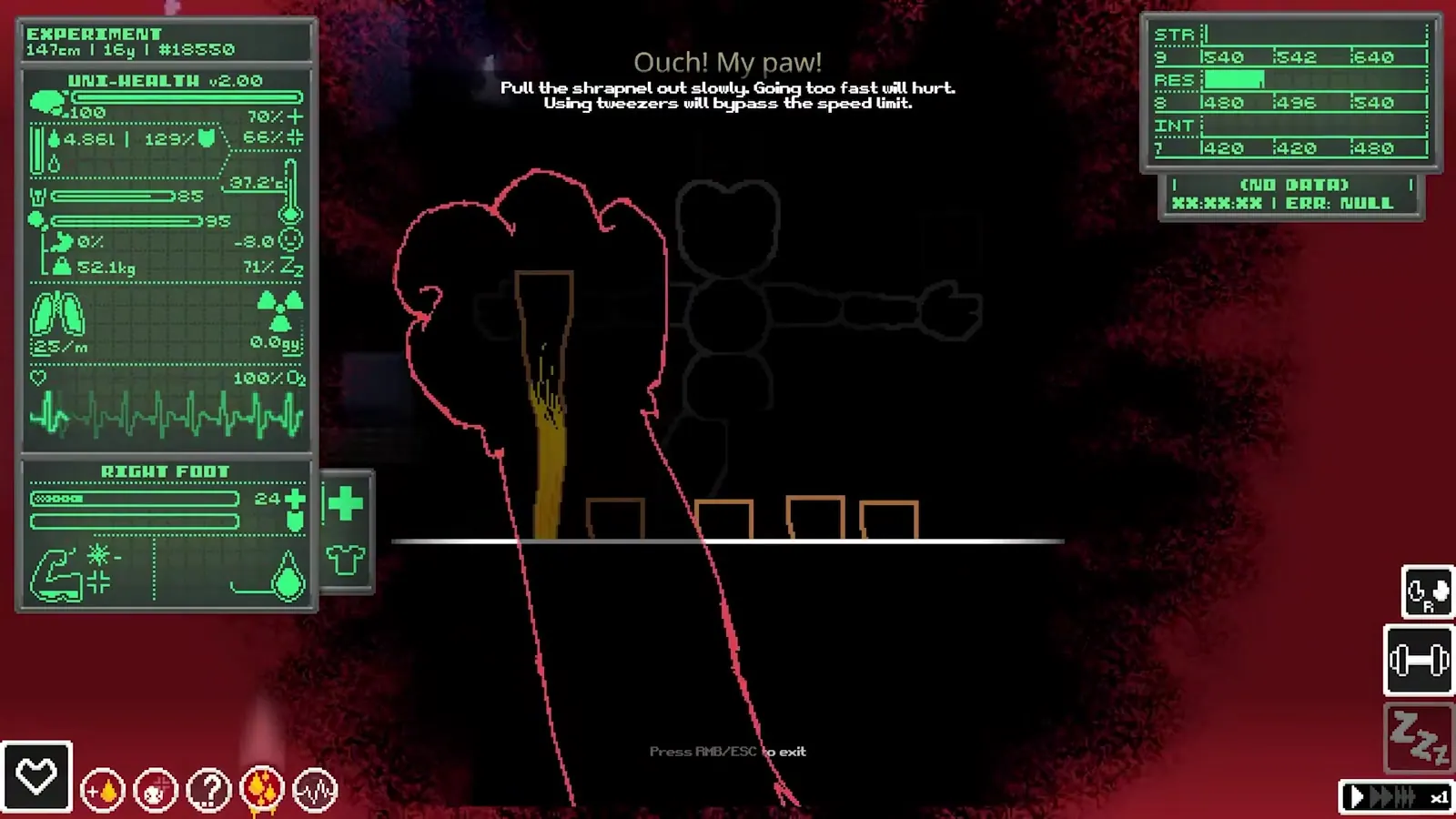
The health panel
Press R to open the health panel. It shows:
- Brain integrity, consciousness and heart rhythm.
- Blood volume and bleeding rate.
- Each limb's skin and muscle health, plus fractures and dislocations.
- Pain, adrenaline, temperature, hunger and thirst.
- Infection and radiation dose.
Read it before you act. The panel is the only place internal bleeding and infection are visible.
Triage order
Treat in this order, every time:
- Consciousness / airway. If brain integrity is falling, start CPR or defibrillation.
- Massive bleeding. Stop the bleed before replacing volume.
- Breathing / chest trauma. Hemothorax needs a chest drain.
- Fractures and dislocations. Splint before you move.
- Infection. Clean and treat before it becomes systemic.
- Pain. Pain shock above 0.66 drops consciousness to zero.
- Hunger, thirst, temperature. Maintenance, not emergencies, until they are.
The order matters because each untreated problem makes the next one harder. A bleeding patient with pain shock will not survive a splint.
Condition-to-item table
| Condition | First-line | Alternative |
|---|---|---|
| External bleeding | Bandage / sterilized dressing | Tourniquet (9-minute limit) |
| Internal bleeding | L.R.D. | Helluce, procoagulant, surgery |
| Infection | Antiseptic / antibiotics | Relief cream |
| Pain | Painkiller / fentanyl | Ice pack |
| Fracture | Splint | Surgery |
| Dislocation | Reduction | Surgery |
| Fibrillation | Defibrillator | CPR |
| Cardiac arrest | Auto-pump + epinephrine | CPR + defibrillator |
| Brain damage | Braingrow | Slow natural healing |
| Hemothorax | Chest drain | Surgery |
| Glass shards | Tweezers | Surgery |
| Bruising | Bruise kit | Rest |
Consciousness and brain damage
Consciousness below 30% makes the character incapacitated. At 0%, you are unconscious and the death timer starts: brain integrity falls about 5.25% per real second, roughly 19 seconds to death.
Causes of instant or near-instant unconsciousness:
- Coil, bear trap, spikes or turret to the head: consciousness to 0.
- Sonic cannon: about -69% if in the beam, -30% if outside line of sight.
- Explosion nearby: about 31%.
- Disfigurement: 30%.
- Pain shock above 0.66: 0%.
If the heart stops, CPR and a defibrillator are the only options. An auto-pump plus epinephrine restarts the heart; a defibrillator corrects fibrillation.
Infection
Infection runs from 0 to 100. The roll happens every 40 seconds while skin health is below 80, at a base chance of 23% × (1 - skin/80), plus a bonus from active bleeding.
Approximate chance per check:
| Skin health | Infection chance |
|---|---|
| 60 | 5.75% |
| 40 | 11.5% |
| 20 | 17.25% |
| 0 | 23% |
Other sources:
- Radiation above 9 Gy: a random infection check every 60 seconds.
- Tourniquet left on over 9 minutes: guaranteed infection.
- Spider-type bites: add infection on top of the wound.
Treatment is antiseptic for the wound and antibiotics for the infection. Relief cream is the general-purpose option. Do not wait for a fever; by then the infection is competing with blood loss.
Fractures and dislocations
Fractures are tracked per limb. A fractured leg prevents running and jumping; a fractured arm prevents climbing and heavy weapons.
Dislocations are a separate injury. They occur from:
- Explosions: 13.5% chance.
- Skullcrusher trap: 50% chance.
- Long falls.
A dislocation adds 75 adrenaline and 40–80 pain, and the limb's muscle cap drops to 50 with effective strength at 0 until reduced. A dislocated spine reduces movement by 30%; a dislocated jaw cuts eating efficiency by 25% and causes slurred speech.
Splint fractures to stabilise the limb. Reduce dislocations. Do not try to walk on either.
Pain
Pain is not just a screen effect. It shakes your hands in minigames, reduces stamina and can push you into shock. Resilience raises pain tolerance by 2.5% per level.
Pain management:
- Painkillers for routine pain.
- Fentanyl for severe pain.
- Ice pack for local pain and swelling.
- Rest in a safe pod.
Pain shock at 0.66 or higher is a medical emergency. Treat it before the next fight.
Fibrillation and cardiac arrest
Fibrillation is an irregular heartbeat that can reach a target of 200 BPM. It is caused by electrical damage, extreme temperature, severe blood loss and some drugs.
Treatment:
- Defibrillator for fibrillation.
- CPR if no defibrillator is available.
- Auto-pump + epinephrine for cardiac arrest.
- Treat the cause: warm the patient, replace blood, stop the bleed.
A defibrillator used on a beating heart does nothing useful. Check the rhythm first.
Surgery
Surgery is required for:
- Amputation.
- Organ repair.
- Hemothorax.
- Deep shards.
- Some fractures.
The demo's surgery loop requires anaesthetic, a clean field, a saw or scalpel, a tourniquet and dressings. Surgery without anaesthetic is possible but the pain will knock the patient out.
Building a medical kit
A realistic kit for layers 1–5:
- 2 bandages.
- 1 sterilized dressing.
- 1 tourniquet.
- 1 splint.
- 1 antiseptic.
- 1 painkiller.
- 1 blood bag or IV bag.
- 1 chest drain if you have one.
- 1 defibrillator if you can afford the weight.
That is about 3–4 u. It fits in a trauma rig with room for water and a spare light.
What to do when you have nothing
If you are injured with no supplies:
- Stop descending. The next layer is harder, not easier.
- Return to the life-pod. It is safe and has storage.
- Find a trader. They sell medicine and will accept loot.
- Craft. Bandages from canvas, splints from wood, antiseptic from plants.
- Accept the loss. A run that ends at layer 3 is better than a death at layer 5 with a full bag.
Pain shock can wait a minute; a severed artery cannot. Triage order is the whole skill of the medical system.
FAQ
What kills fastest? Brain damage and massive bleeding. Both are measured in seconds to minutes.
How long does a tourniquet last? Nine minutes before guaranteed infection.
Can infection kill? Yes, if untreated. It also raises the cost of every other treatment.
What treats internal bleeding? L.R.D., Helluce, procoagulant or surgery.
Do fractures heal on their own? Yes, slowly. Splinting speeds recovery and prevents worse damage.
Is brain damage permanent? Braingrow is the main treatment; without it, recovery is very slow.
Sources and further reading
Related guides
More Casualties: Unknown Guides
Container capacity, weight reduction and single-item limits in Casualties: Unknown, with the best backpack, belt and pouch for each stage of a run.
A practical best build for Casualties: Unknown: trait order, gear slots, medical kit, opening route and the combat loop that survives layer 5.
Hunger, thirst, sickness and radiation values for every food and drink in Casualties: Unknown, plus the best items to carry into each layer.
The best mods for Casualties: Unknown, what each one changes, and how to choose mods that will survive the jump from demo to full release.
Every weapon in the Casualties: Unknown demo ranked: damage, swing speed, durability, ammo and which weapon fits which layer.
The three playable characters in Casualties: Unknown, what Experiment can do in the demo, and what is actually confirmed about Milky and Dune.
All six Casualties: Unknown presets plus the 41 custom run settings, with defaults, ranges and the options that actually change survival.
Casualties: Unknown endings explained: the confirmed story goal, the unreleased final layers, what the demo does at layer 5, and what is still speculation.